How to Use ChatGPT: Complete Beginner’s Guide for 2026 If you have heard people talking about ChatGPT but…
How AI Is Changing Search Engines in 2026
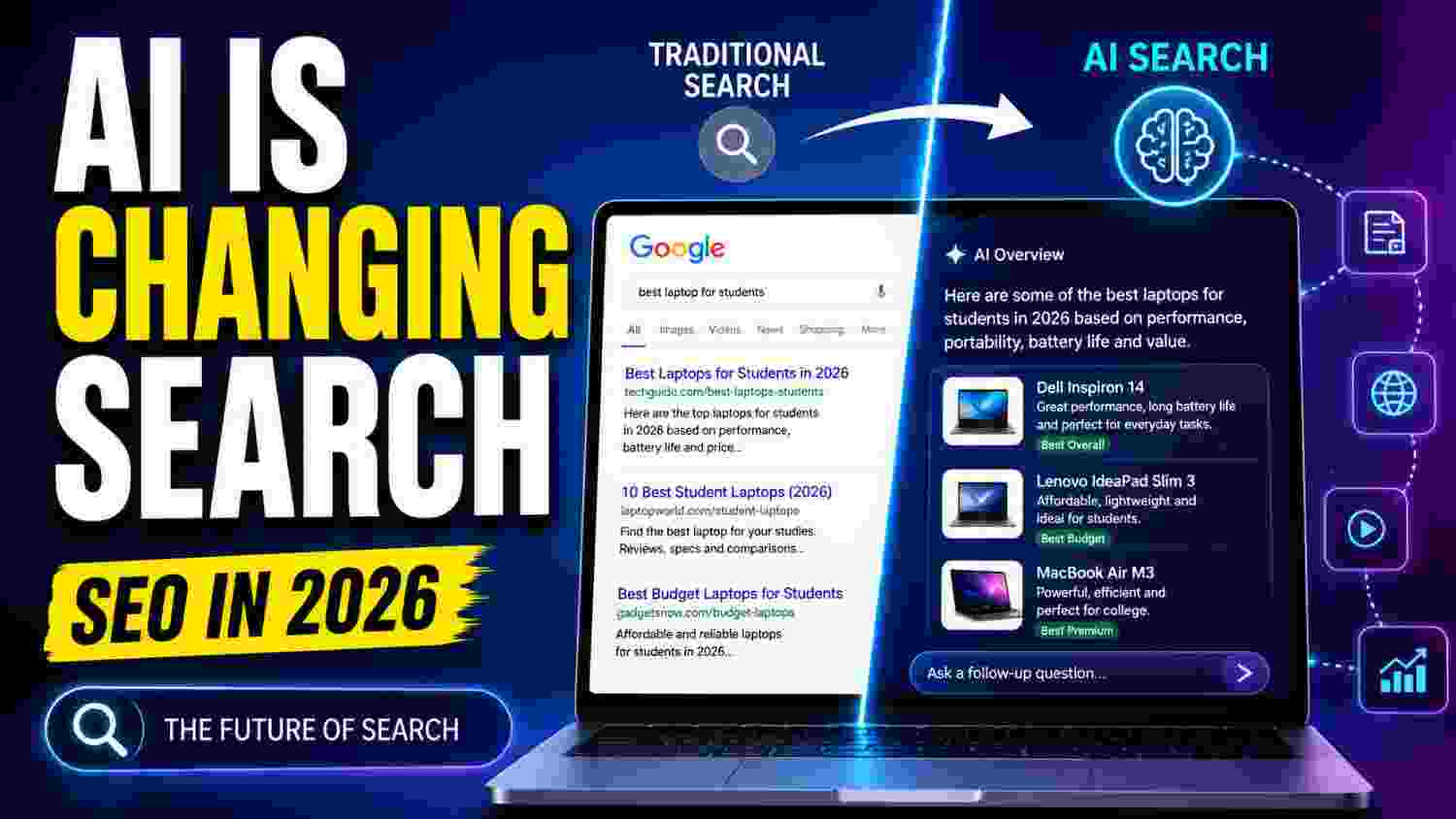
Artificial intelligence is changing how people discover information online. Traditional search meant typing keywords, scanning links and opening websites. In 2026, AI-powered search is becoming conversational, multimodal and increasingly capable of helping users research, compare and act. How AI Is Changing Search Engines
Table of Contents
- From Keywords to Questions
- What Are AI Overviews?
- What Is AI Mode?
- Search Is Becoming Multimodal
- Search Engines Are Becoming Decision Assistants
- How AI Agents Could Change Search
- What About ChatGPT Search?
- What Does This Mean for Bloggers?
- SEO Is Moving Toward Answer Quality
- Why Original Content Matters More
- Why Long-Tail Queries Matter
- What Bloggers Should Do in 2026
- The Future of Search
- Final Thoughts
From Keywords to Questions
Traditional search often worked best with short keyword queries. AI-powered search makes it easier to ask a complete question with context, constraints and follow-up requests. Instead of searching best laptop under $1,000, a user can ask for a lightweight laptop for programming and travel and request a comparison. Search systems can increasingly interpret intent rather than relying only on keyword matching.
What Are AI Overviews?
Google’s AI Overviews provide an A -generated summary in Search when an A response can be useful. Users can follow links to explore supporting sources.
What Is AI Mode?
AI Mode takes conversational search further. It is designed for complex questions and follow-up conversations. Google describes AI Mode as capable of breaking complicated questions into related searches, gathering information and combining results into a response. This approach is often described as query fan-out.
Search Is Becoming Multimodal
Text is no longer the only input. Modern AI search can work with combinations of text, images, files, video and voice. A user can show an image, upload a document or describe a problem and ask Ai to interpret it. Search is moving from simply typing keywords toward showing, speaking or describing a problem.
Search Engines Are Becoming Decision Assistants
AI search is increasingly helping users evaluate information instead of simply presenting pages. A detailed request can ask for comparisons based on several criteria, helping the user reach a decision faster.
How AI Agents Could Change Search
AI agents can potentially reason through a task, use connected tools and complete multiple steps. This moves search from Search → Answer toward Search → Understand → Act. As agents improve, search may become the starting point for workflows.
What About ChatGPT Search?
OpenAI’s ChatGPT Search brings current web information and source links into a conversational AI experience. Users can ask a question, request clarification and continue the conversation. The boundary between a search engine and an A assistant is becoming less clear.
What Does This Mean for Bloggers?
If AI can summarize information directly in search results, publishers need to think beyond simply ranking for a keyword. Websites remain important because AI search experiences still connect users with web sources, but generic content may have less opportunity to stand out.
SEO Is Moving Toward Answer Quality
Traditional SEO still matters: crawlability, internal links, titles, descriptions, mobile usability and site performance. But AI-powered search increases the value of useful, trustworthy content.
- Answer the main question clearly.
- Use logical headings and helpful structure.
- Explain important claims and cite reliable sources.
- Show expertise and real-world context.
- Keep important information updated.
- Use internal links to build topic depth.
Why Original Content Matters More
When AI systems can summarize thousands of pages, simply rewriting the same information becomes less valuable. Original content can stand out through first-hand experience, original research, testing, case studies, unique comparisons, screenshots and original data.
Why Long-Tail Queries Matter
Conversational AI makes detailed questions easier to ask. This creates opportunities for websites to answer specific problems rather than targeting only broad keywords.
What Bloggers Should Do in 2026
1. Write for people first
Use natural language, clear explainations and practical examples.
2. Answer the main question early
Give readers a useful answer near the beginning, followed by evidence and detail.
3. Build topical authority
Create connected articles around a subject. An AI Guides section can cover AI agents, generative AI, AI search, AI tools and model comparisons with strong internal links.
4. Add original information
Use your own tests, screenshots, examples, research and experience whenever possible.
5. Keep content updated
AI models and search features change quickly. Review important articles regularly.
6. Keep technical SEO healthy
Make sure your website is fast, mobile-friendly, crawlable and easy to navigate. Use descriptive titles, headings, clean URLs, accessible images and sensible internal links.
The Future of Search
The future is likely to combine Search + AI + Agents + Personalization + Multimodal Input. Users may speak a question, upload a document, show an image or describe a complicated problem. An AI system can then search multiple sources, reason over the information, explain the result and potentially help with the next action.
Final Thoughts
AI is not simply making search engines faster. It is changing what users expect from them: better answers, context, reliable sources, comparisons, personalized information, follow-up conversations and help completing tasks.
For bloggers, the key question is changing from only “How do I rank number one?” to “How can I create the most useful, trustworthy and original answer to this user’s problem?”
Official Sources
- Google Search: AI Mode and AI Overviews
- Google Search: AI Mode user insights
- OpenAI: Introducing ChatGPT Search
Search features and AI capabilities change quickly. This guide reflects the search landscape in August 2026.