A practical beginner's guide to importing products, covering supplier checks, landed cost, documentation, compliance and shipment planning.
Best Ways to Find Buyers in the GCC | Export Guide
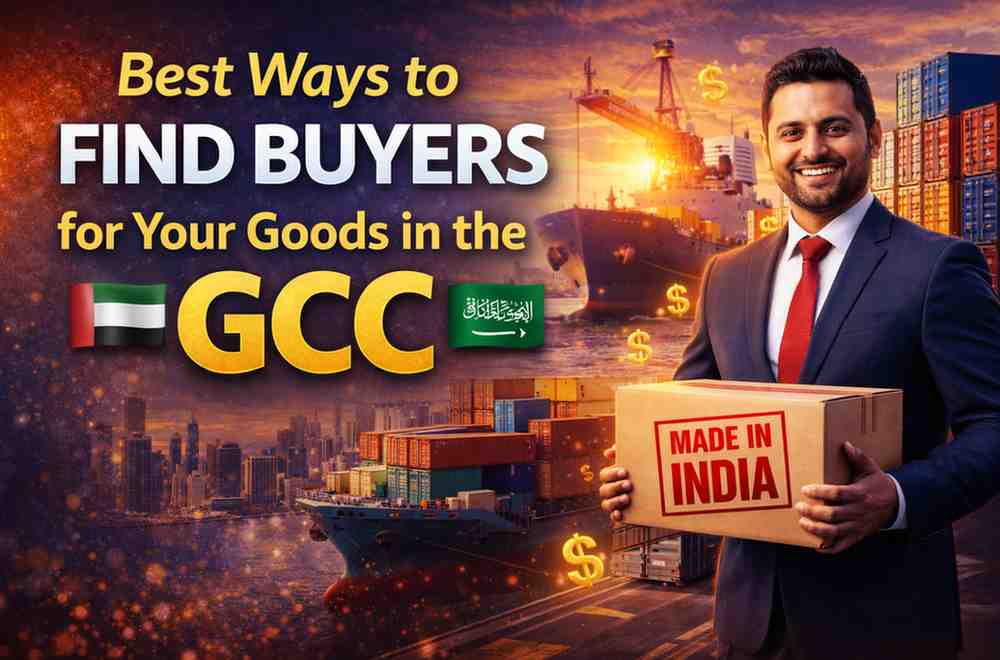
How to Find Buyers in the GCC for Export Products
The GCC region, which includes the United Arab Emirates, Saudi Arabia, Qatar, Kuwait, Bahrain, and Oman, has become one of the fastest-growing import markets for Indian goods in 2026. With high purchasing power, a strong consumer base, and business-friendly policies, the demand for products such as rice, spices, textiles, electronics, construction materials, and consumer goods continues to rise.
However, entering the GCC market is not just about having a quality product. The real challenge lies in finding reliable buyers who can place bulk orders, pay on time, and build long-term business relationships. For Indian exporters, especially small and medium businesses, identifying the right buyers can determine success or failure in international trade.
This guide explains the most effective and practical ways to find buyers in the GCC region. These methods are widely used by successful exporters and can help you generate genuine inquiries and close deals faster.
1. Use B2B Marketplaces and Online Platforms
B2B marketplaces are one of the fastest and most cost-effective ways to find buyers in the GCC. These platforms connect exporters with importers who are actively searching for products.
Popular platforms include Alibaba, TradeKey, ExportHub, TradeWheel, Go4WorldBusiness, Tradeling, and Abraa. Many of these platforms have strong buyer bases in the UAE and Saudi Arabia, making them ideal for targeting GCC markets.
To succeed on these platforms, it is important to create a professional and complete profile. Upload high-quality product images, mention your minimum order quantity, include competitive pricing, and highlight certifications such as Halal or ISO if applicable. Buyers in the GCC often prefer suppliers who clearly communicate their standards and reliability.
Another key factor is response time. Replying to buyer inquiries within 24 hours significantly increases your chances of securing orders. Using relevant keywords like “Indian exporter,” “bulk supplier,” or “Halal certified products” can also improve visibility.
Many Indian exporters receive their first orders within a few weeks of actively using these platforms.
2. Attend Trade Shows and Exhibitions
Trade shows and exhibitions remain one of the most powerful ways to connect with serious buyers in the GCC. Unlike online platforms, these events allow face-to-face interaction, which is highly valued in Gulf business culture.
Major exhibitions such as Gulfood in Dubai and construction-related expos in Saudi Arabia attract thousands of buyers from across the region. These events provide an opportunity to showcase your products, understand market trends, and build direct relationships with importers and distributors.
To make the most of these events, prepare in advance. Carry product samples, brochures, and business cards. Be ready to explain your pricing, packaging, and shipping capabilities. Most importantly, follow up with potential buyers within 48 hours after meeting them.
If budget is a concern, Indian exporters can participate through government-supported trade delegations. Organizations such as export promotion councils often provide financial support and arrange meetings with buyers.
3. Use LinkedIn for Targeted Outreach
LinkedIn has become a powerful tool for finding international buyers, especially in the GCC region. Many procurement managers, importers, and business owners actively use the platform.
Start by optimizing your profile. Clearly mention your business, products, and export markets. A strong headline such as “Indian Exporter of Spices Supplying to UAE and Saudi Arabia” can attract attention.
Next, search for relevant decision-makers using terms like “Import Manager UAE,” “Procurement Head Saudi Arabia,” or “Distributor Dubai.” Send personalized connection requests explaining how your product can benefit their business.
Consistency is key on LinkedIn. Regularly post updates about your products, shipments, and industry insights. This helps build credibility and attracts inbound inquiries. Many exporters have successfully closed deals purely through LinkedIn networking.
4. Partner with Distributors and Wholesalers
Working with local distributors is one of the most effective long-term strategies for entering the GCC market. Instead of selling directly to multiple small buyers, you can partner with one distributor who already has an established network.
Distributors can help you reach supermarkets, retail chains, and large projects more efficiently. They also understand local regulations, customer preferences, and market dynamics.
To find distributors, use business directories, online searches, and import data tools. You can also contact Indian embassies or trade offices in GCC countries for assistance.
Once you identify potential partners, send product samples and offer competitive pricing. Providing exclusive distribution rights for a specific region can make your offer more attractive.
5. Use Additional Smart Strategies
In addition to the main methods, several other strategies can help you find buyers more effectively.
Trade agreements such as the India-UAE CEPA have reduced import duties on many products. This allows Indian exporters to offer better pricing compared to competitors from other countries.
Online communication platforms such as WhatsApp and Telegram are also widely used in the GCC. Many business groups share buyer requirements and trade opportunities.
Search engines can be another useful tool. By searching for terms like “supermarket chains in UAE” or “wholesale distributors in Saudi Arabia,” you can directly find potential buyers and contact them.
The Indian business community in the GCC is strong and well-connected. Networking with Indian entrepreneurs already operating in the region can open doors to valuable opportunities.
Preparation Before Approaching Buyers
Before contacting buyers, ensure that your business is fully prepared. This includes having proper certifications, especially Halal certification for food products, which is essential in the GCC.
Prepare professional documents such as quotations, product catalogs, packing lists, and certificates of analysis if required. Understanding local regulations, including VAT, product standards, and shelf-life requirements, is also crucial.
It is advisable to start with small trial orders to build trust with new buyers. Over time, as the relationship strengthens, order volumes can increase.
Some exporters also consider setting up a company in a Dubai Free Zone to improve credibility and simplify logistics.
Common Mistakes to Avoid
Many exporters fail due to simple but critical mistakes. Sending generic messages to multiple buyers without personalization reduces response rates. Each message should clearly explain how your product meets the buyer’s needs.
Another common mistake is not following up. Many deals are lost simply because exporters do not send reminders or maintain communication.
Ignoring relationship building is also a major issue. Business in the GCC is based on trust and long-term relationships. Price alone is not enough to secure deals.
Finally, incorrect pricing can create problems. Always consider shipping costs, duties, and other expenses when quoting prices.
Final Thoughts
Finding buyers for your goods in the GCC in 2026 is easier than ever if you use the right strategies. By combining B2B marketplaces, LinkedIn outreach, trade exhibitions, and distributor partnerships, Indian exporters can build a strong presence in the Gulf market.
The key is consistency, professionalism, and relationship building. Start with a few methods, refine your approach, and gradually expand your network.
With the right efforts, Indian sellers can successfully grow their export business and establish long-term partnerships in the GCC region.