

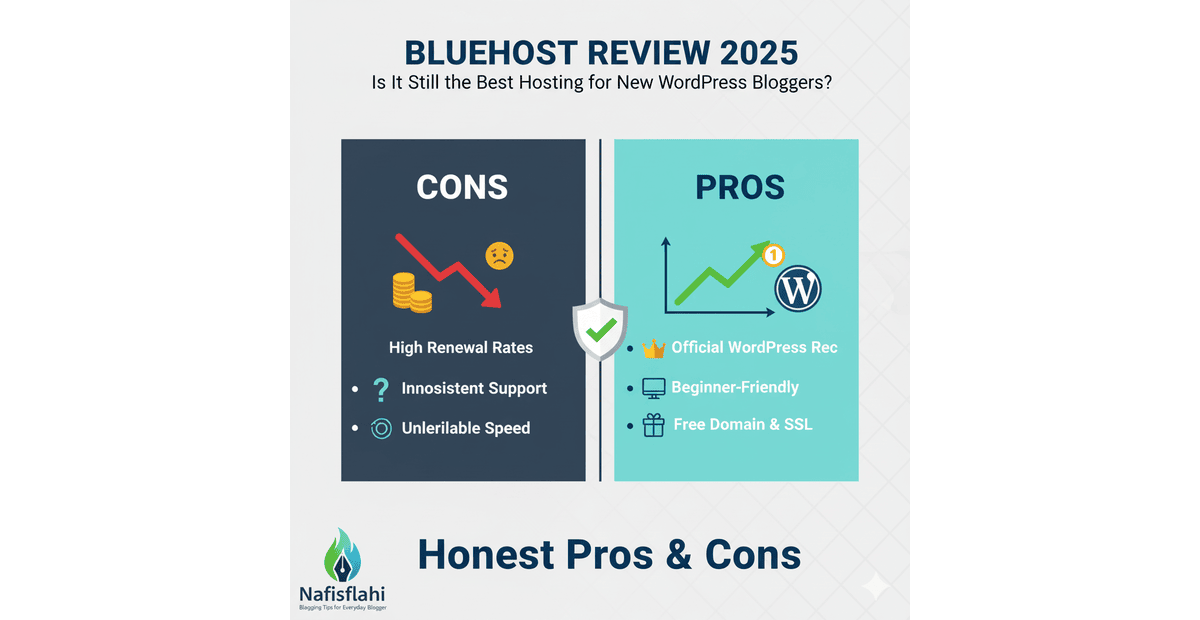
If you’re starting a new blog, you’ve seen the name Bluehost. They’re everywhere, and they’ve been an official WordPress.org recommended host for nearly two decades. But is their fame justified, or are they just relying on a big name?
I’ve personally analyzed user reviews about Bluehost Review, forum discussions, and tested their platform to see where they shine and, more importantly, where they fall short. This review will give you the unfiltered truth you need before you commit your new site to their servers.
The Good: 5 Reasons Bluehost is Still a Top Pick for Beginners
Bluehost excels at getting new bloggers from zero to live quickly and affordably. Their platform is built with the first-time user in mind.
1. WordPress.org’s Official Stamp of Approval
This is the biggest advantage. WordPress.org only officially recommends three hosting providers, and Bluehost is one of them. This means their hosting environment is highly optimized for the platform, offering:
- One-Click WordPress Installation
- Automatic WordPress Core Updates
- A seamless, integrated experience
- [Author’s Personal Anecdote]: Add a quick story here about how easy the initial setup was compared to a competitor.
Bluehost Review 2019: Shared Hosting for WordPress
2. A Truly Beginner-Friendly Dashboard
If you’ve ever logged into a confusing cPanel interface, you’ll appreciate this. Bluehost features a customized, intuitive dashboard that simplifies website management. It takes the complex tools and puts them behind a clean, simple interface.
3. Excellent Initial Value and Freebies 🎁
For a new blogger running on a tight budget, Bluehost offers features that are often paid add-ons elsewhere:
- Low Introductory Price: The 36-month plan offers the best savings upfront.
- Free Domain Name for 1st Year
- Free SSL Certificate (Crucial for SEO and trust)
- Free Content Delivery Network (CDN) integration for faster global loading.
4. 24/7 Support (When You Need It Most)
You will inevitably break something at 2:00 AM. While the quality of Bluehost’s customer support is a point of contention (see the Cons section), the simple fact is that their 24/7 availability via phone and live chat is a lifeline for beginners who need immediate help.
5. Essential Security is Built-in
Every plan includes basic security features like a free SSL Certificate and free malware scanning. This provides a crucial baseline level of protection without you having to install extra plugins or pay for third-party services on day one.
The Bad: 5 Complaints That Will Affect Your Long-Term Blogging
Now for the part that most reviewers gloss over. Based on aggregated user reviews from forums and independent sites, here are the genuine pain points to consider before signing up.
1. The Shocking Renewal Price & Constant Upsells ⚠️
This is the single most criticized point. The low introductory price is a honey trap. Expect your bill to jump significantly when your contract renews. Furthermore, users report aggressive upsell tactics during the checkout process and constant banners within the dashboard pushing paid add-ons.
2. Inconsistent Speed and Reliability (Especially Under Load)
Bluehost shared hosting can struggle with performance, particularly if your site experiences a traffic spike (a great problem to have, but still a problem!). While their uptime is generally solid, the speed can be unreliable, which directly impacts your SEO ranking and user experience.
3. Customer Service Quality is a Hit-or-Miss 📞
While the support is available 24/7, the quality is frequently criticized. Many users report long wait times on live chat, issues being escalated repeatedly, and a general lack of deep technical expertise from the initial support representatives. For complex site issues, this can be frustrating.
4. Basic Plans Are Heavily Limited
To get the low advertised price, you have to choose the basic plan, which comes with significant restrictions:
- Limited SSD storage (only 10GB or 20GB).
- Poor native backup solutions (often requiring a paid third-party add-on).
- Restrictions on the number of email accounts and websites you can host.
5. US-Only Servers Limit Global Reach
Bluehost primarily utilizes US-based data centers. If your target audience is heavily concentrated outside of North America, this can result in slower loading times for them, potentially hurting your global SEO and conversion rates.
Final Verdict: Who Should & Shouldn’t Use Bluehost?
Based on the pros and cons, my final recommendation is clear:
| ✅ Use Bluehost If… | ❌ Avoid Bluehost If… |
| You are a brand-new blogger on a strict budget. | Your site receives high, unpredictable traffic (i.e., you are already established). |
| You want an easy, hands-off setup for WordPress. | You are a developer or need root access for server-level customization. |
| Your audience is primarily in North America. | You need guaranteed, lightning-fast speed for an eCommerce store. |
| You plan to commit to a long-term (36-month) introductory plan. | Y |
Bluehost is an excellent “starter car” for your blogging journey. It’s cheap, reliable enough for low traffic, and perfectly integrated with WordPress. Just be prepared to either migrate when your introductory rate expires, or budget for the higher renewal fee if your site has grown successfully.