
Is your WordPress blog stuck in traffic limbo? Discover the 5 essential SEO tweaks every everyday blogger needs…
LC at Sight Meaning: How It Works in International Trade
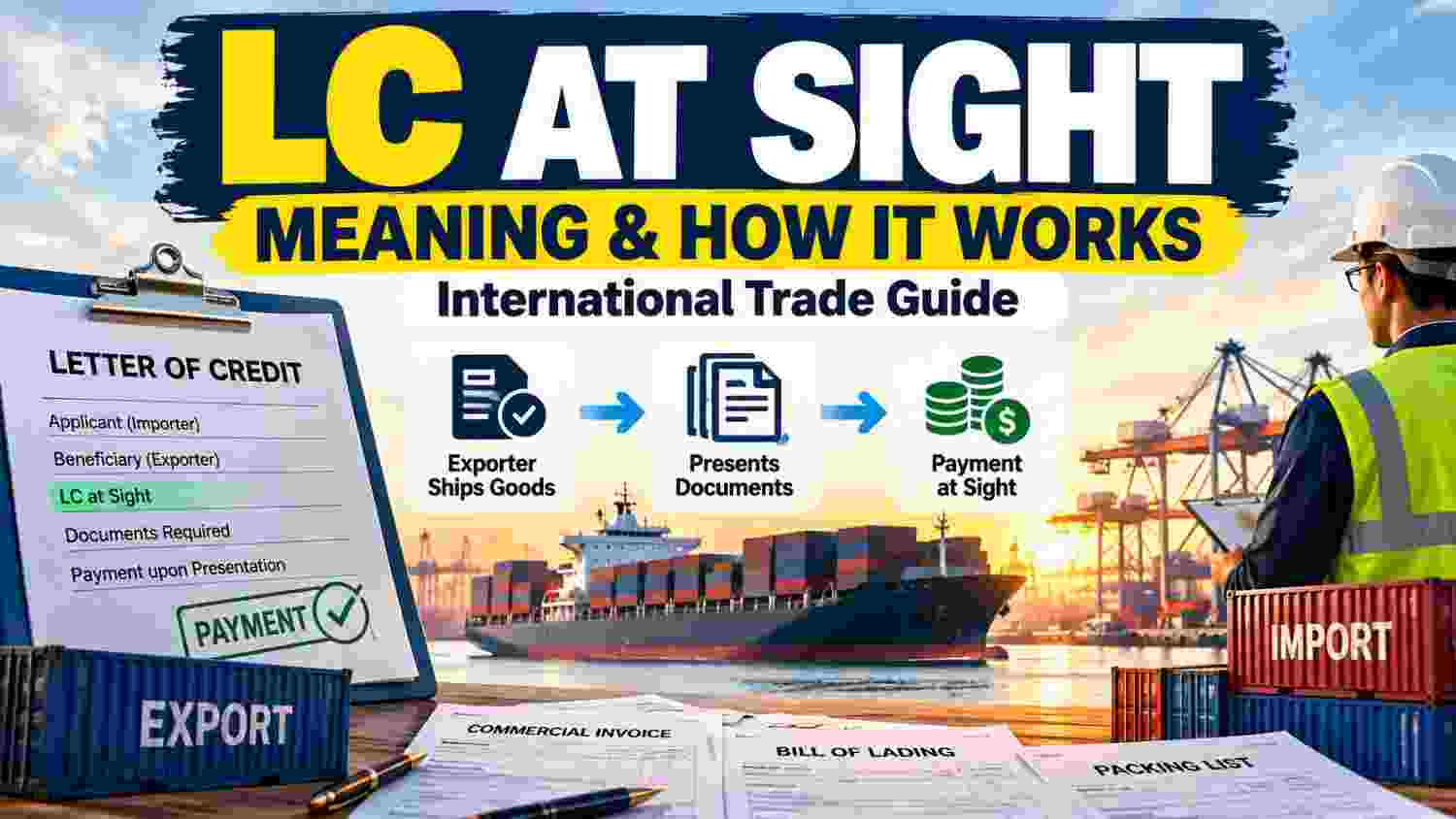
If you are new to international trade, one of the first payment terms you may come across is an LC at Sight. It is commonly used in import and export transactions where the seller wants payment based on a complying presentation of the required documents rather than waiting for a future credit period.
In simple terms, an LC at Sight means that the documentary credit is available for payment at sight, subject to the conditions written in the credit and the presentation of documents that comply with those conditions.
What Does LC at Sight Mean?
LC at Sight means a Letter of Credit where payment is available at sight when the required documents are presented and found to comply with the terms of the credit. The exact payment process depends on the wording of the LC and the banks involved.
If you want a more detailed explanation of the instrument, its process, documents, advantages and practical example, see our existing guide: Understanding LC at Sight: A Comprehensive Guide to Letters of Credit in International Trade.
How Does an LC at Sight Work?
- The buyer and seller agree on the transaction and payment terms.
- The buyer asks the issuing bank to issue the documentary credit.
- The bank issues the LC in favour of the exporter or beneficiary.
- The exporter ships the goods according to the agreed terms.
- The exporter prepares and presents the documents required by the LC.
- The relevant bank examines the documents against the credit terms and applicable documentary-credit rules.
- If the presentation is complying, payment is made according to the availability terms of the LC.
What Documents Are Usually Required?
The exact document list depends on the individual LC. Depending on the transaction, it may include a commercial invoice, packing list, transport document such as a bill of lading, certificate of origin, insurance document where required, inspection certificate, or other documents specified in the credit.
Why Is Document Accuracy Important?
An LC is documentary. Banks examine the presentation against the terms of the credit and applicable rules rather than simply checking whether the goods themselves are satisfactory. A discrepancy in documents can therefore affect the handling or payment of the presentation.
For exporters, it is useful to review the LC carefully before shipment and check names, quantities, dates, ports, document requirements and presentation deadlines. If a requirement is unclear or commercially difficult to meet, discuss it with the relevant bank before proceeding.
LC at Sight vs Usance LC
The main difference is the payment timing. With an LC at Sight, payment is available at sight subject to a complying presentation. A Usance or deferred-payment LC provides for payment at a future maturity stated in the credit.
For a detailed side-by-side explanation, read our guide on LC at Sight vs Usance LC.
Example of an LC at Sight Transaction
Suppose an importer in Saudi Arabia purchases goods from an exporter in India and the parties agree to use an LC at Sight. The buyer’s bank issues the LC with specific document requirements. After shipment, the Indian exporter presents the required documents through the appropriate banking channel. If the presentation complies with the LC terms, the transaction proceeds according to the credit’s sight-payment terms.
Important Points for Exporters
- Read the LC before shipping the goods.
- Check the latest shipment and presentation dates.
- Match document details carefully with the LC.
- Do not assume that payment is automatic simply because an LC has been issued.
- Ask your bank about discrepancies, charges and the applicable document-handling process.
Frequently Asked Questions
What is LC at Sight in simple words?
It is a documentary credit under which payment is available at sight when the required presentation complies with the terms of the credit.
Does LC at Sight mean the exporter gets paid before shipment?
Not necessarily. The payment terms depend on the specific credit. In a typical transaction, the exporter ships the goods and presents the required documents before payment is processed under the sight terms.
Is LC at Sight the same as Usance LC?
No. A sight LC provides for payment at sight subject to a complying presentation, while a usance or deferred-payment LC provides for payment at a future maturity.
Final Takeaway
LC at Sight is mainly about payment timing and documentary compliance. For importers and exporters, the most important step is to understand the exact terms written in the credit before the transaction moves forward.
Related reading: Understanding LC at Sight and LC at Sight vs Usance LC.